.png)

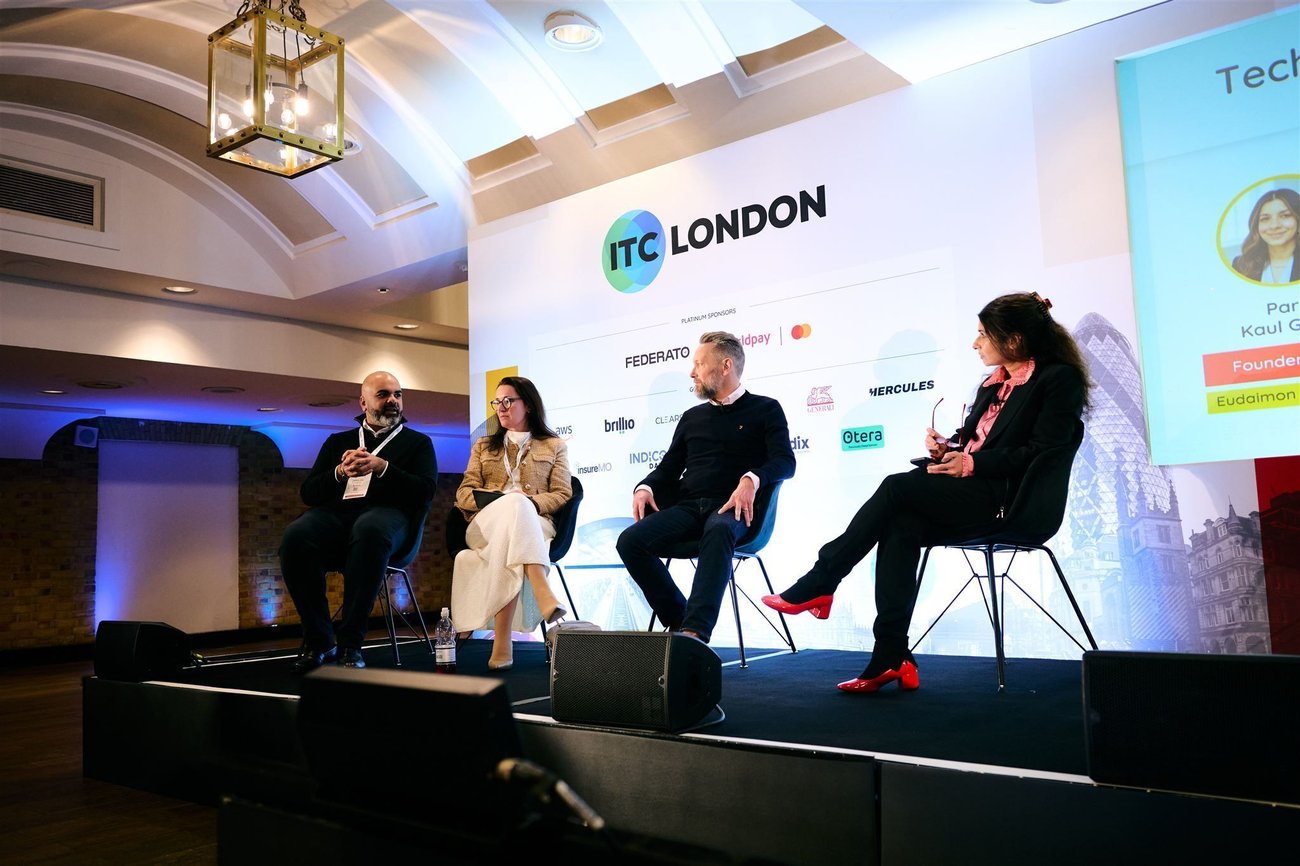
On January 26, 2026, the Main Stage at ITC London hosted a critical discussion that resonated with a packed room of insurance leaders and innovators. The topic? "Tech Adoption in a Legacy Industry."
While the industry often fixates on the latest technology breakthroughs, this closing panel stripped away the hype to focus on the real engine of transformation: organizational culture.
Hosted by Parul Kaul-Green, Founder & CEO of Eudaimon Consulting, INSTANDA’s CTO Kevin Gaut joined industry experts Laurie Davison (Group COO, Munich Re Specialty - Global Markets) and Arslan Hannani (Chief Innovation Officer, Aviva) to explore why true transformation depends as much on people as on the solutions you choose.
Here we share the key insights from the session, exploring how insurers can move from endless pilots to true operational integration.
Redefining "Legacy" in 2026
The term "legacy" is commonly used in insurance, usually to describe anything old and clunky. However, the panel immediately challenged this definition. Legacy isn't just about the age of the code; it’s about the agility of the business.
Aviva’s Arslan Hannani opened the debate by suggesting that legacy is more of a feeling of being stuck rather than a specific coding language. It represents the frustration of seeing an opportunity to move past a constraint but being unable to do so because of prioritization, budgets, or inertia.
Elaborating on this, Munich Re’s Laurie Davison offered a pragmatic perspective, arguing that the age of a system is irrelevant if it still performs well. “For me, legacy isn’t defined by how old a system is. It’s about whether your technology supports your business objectives. If it doesn’t, that’s the real issue,” she explained. “It could be two, three, or even twenty years old.”
Kevin Gaut, bringing the perspective of a technology partner who helps insurers break free from these constraints, noted that, “The problem runs deeper than hardware. It is psychological.”
He shared that a significant challenge for insurers lies in how deeply their operational processes are tied to their existing systems. This dependency often limits their ability to envision alternative workflows or innovative approaches that break away from the constraints of their current architecture. Without reimagining processes beyond the framework of legacy systems, transformation efforts risk becoming superficial, offering only a digital facade over outdated practices.
Addressing Cultural Resistance
Host, Parul Kaul-Green, asked the panel, “If the technology exists to solve our problems, why is adoption so difficult?” The panel agreed that the friction is rarely technical. It is almost always cultural.
When asked about the resistance he encounters, Kevin was candid about the internal dynamics that stall progress. He noted that platforms like INSTANDA democratize technology, allowing business users to launch products and build websites without deep technical intervention. While this empowers the business, it can make internal teams feel threatened, which is why, he added, “It’s important to take people on the transformation journey with you.”
Beyond the fear of becoming obsolete, Kevin observed that the comfort of established routines can be a significant barrier to change. Familiar ways of working often persist simply because they are ingrained habits, which makes teams less likely to embrace new approaches and contributes to cultural resistance.
To overcome this, leadership must be brave. Arslan emphasized that successful transformation requires leaders who are willing to take risks with their own social capital. He observed that genuine transformation takes place when leaders not only commit to change but also have the courage to take personal and professional risks for their teams. Demonstrating bravery in the face of uncertainty, especially when careers and outcomes are on the line, is essential for unlocking the full potential of organizational change.
Aligning Tech with Business Outcomes
A recurring theme throughout the discussion was the danger of "solutionizing"—starting with a piece of technology and looking for a problem to solve.
Laurie shared a powerful approach to prioritization: "I don't fund technology projects." She noted that when organizations fund technology projects in isolation, it often shifts ownership away from the business and onto IT departments. This can lead to a passive approach from business teams, who may disengage and later critique the outcomes, rather than being active partners in delivering results.
Instead, she shared that Munich Re looks for the business owner who will benefit most and makes them accountable. This shifts the dynamic from IT delivery to business partnership.
Kevin reinforced the idea that true progress comes from aligning technology initiatives with strong business strategies. While vendors are eager to innovate, their success depends on the strength and clarity of the client's business model. Technology is most effective when paired with well-defined product strategies.
Kevin highlighted that, although vendors may not be responsible for increasing business volume directly, they can drive measurable improvements such as enabling faster change, accelerating speed to market, and supporting the ability to experiment with new ideas. These are tangible outcomes where technology can make a real impact, helping insurers remain agile and competitive.
The Paradox of Proof of Concepts (POCs)
The insurance industry often faces the challenge of moving from successful Proof of Concepts to full-scale production, sometimes resulting in a phase known as "pilot purgatory." The panel addressed a specific audience question on how to encourage investment in experimentation when leadership demands concrete results.
Kevin noted that the real value lies in minimizing the cost of experimentation, which enables organizations to try multiple POCs instead of investing heavily in just one large-scale transformation. By spreading resources across several initiatives, insurers greatly improve their chances of success. This approach offers greater flexibility and learning opportunities compared to putting all efforts—and capital—into a single project.
However, even successful POCs face hurdles when scaling. Laurie pointed out the "Monday morning" problem. "If this POC comes in, who does it affect on Monday morning, and are they going to want the disruption?" she asked. Without a plan for operational integration, even a successful pilot will wither on the vine.
The Narrative of Change
As the session wrapped up, the panel offered encouraging advice to the audience, emphasizing that while technology adoption presents real challenges, it also brings immense opportunities for growth and improvement. Rather than searching for a quick fix, embracing the hard work of transformation can lead to meaningful and lasting change.
Kevin reminded everyone that while modernization is demanding, the effort invested is what ultimately drives progress. By meeting these challenges head-on, organizations can unlock new capabilities and create significant value for both their business and their people.
His advice was to focus on communication and value. "Work on your narrative— how you tell the story—highlighting the ways you’re fixing problems that benefit both the organization and its people.”
Conclusion
The takeaway from ITC London 2026 is clear: Whether it is redefining what "legacy" really means, overcoming the "we've always done it this way" mentality, or ensuring that technology serves a clear business outcome, the path forward requires empathy, bravery, and a relentless focus on value.
As the panel demonstrated, the technology to transform insurance is ready. The question remains: is the culture ready to adopt it?
Interested in how INSTANDA helps insurers bridge the gap between legacy constraints and future ambition? Discover our platform today.