.png)

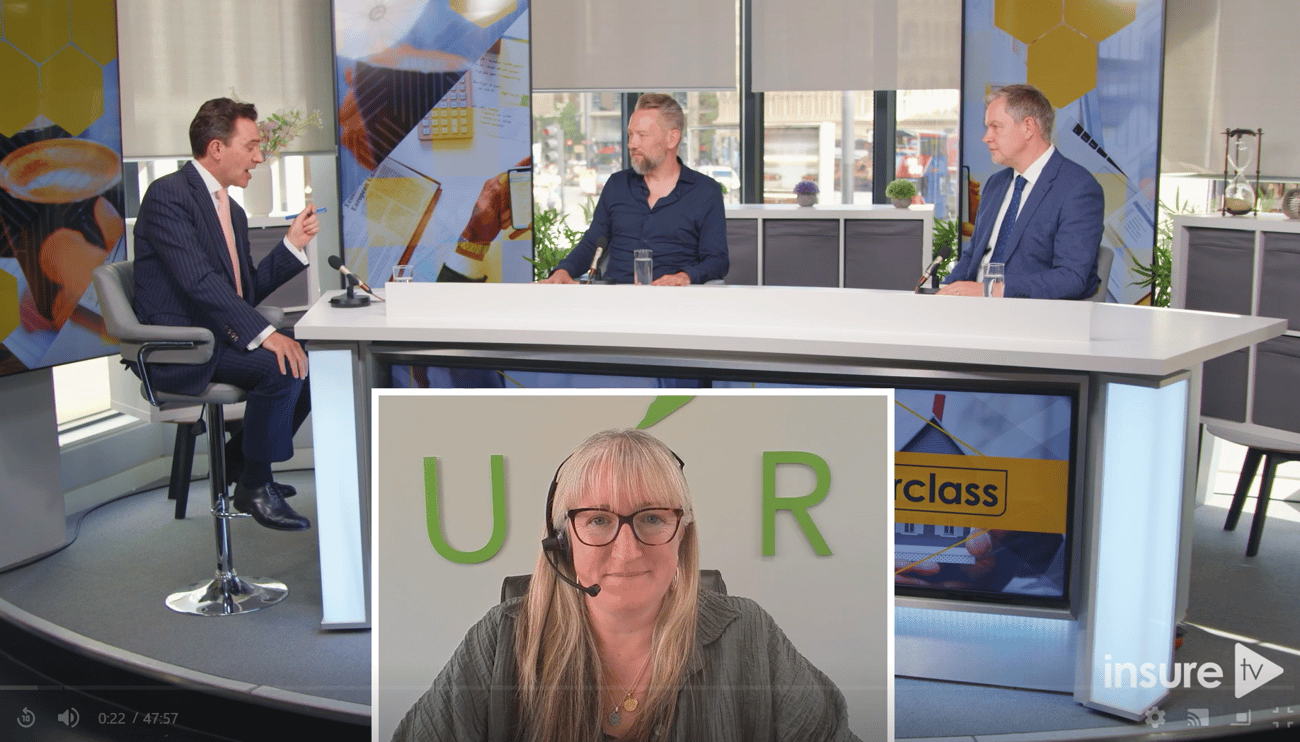
INSTANDA CTO Kevin Gaut recently joined an InsureTV masterclass on AI, hosted by Benjamin Bracken. Alongside him were Ian Wrigglesworth, CTO for UK Retail at Hiscox UK, and Laura Hancock, Managing Director of Yutree. The brief was practical: how should insurance businesses implement AI, what should they use it for, and what should they leave alone?
The panel brought three different vantage points: a specialist insurer, a growing broker and MGA, and INSTANDA, a technology platform that sees AI use cases across clients in seven regions globally. What stood out was how much the panel agreed on. Here are the main themes, and Kevin's view on each.
Adoption is a culture shift first
Laura opened with a clear position: AI adoption is overwhelmingly a culture issue, because it means redesigning processes, behaviours and accountability around the technology. Ian described how Hiscox built trust through regular training, shared best practice and, for a period, a leadership leaderboard to encourage use.
Kevin agreed, noting that INSTANDA started from a slightly different place as a SaaS business full of naturally curious, creative people. The team adopted AI development tools and Copilot almost as soon as they were available, and everyone completes a baseline of training. Today, AI use is simply expected. "It's a bit of an arms race, and we need to be competitive," he said.
Kevin said what encourages him most is the change in mindset. "People who once valued doing things that AI can now do are embracing it, because it frees them up for higher value, more creative work," he explained. That payoff, capacity returned to people for the work that matters, was a point every panellist made.
Everyone is learning together
Kevin highlighted something he described as unique in his working career: AI has put everyone on an even keel. As the technology is moving so quickly, nobody has all the answers, and that has created "a real sense of common learning".
At INSTANDA, people who build a useful skill or prompt share it, and others build on it. That learning crosses functions too, with account teams learning from engineering and engineering learning from sales.
The shape of the role is changing
All three panellists see the skills profile shifting. Kevin explained that many engineers and testers have traditionally preferred to focus deeply on one thing. Working with AI increasingly means managing a group of agents running several activities at once, so INSTANDA is thinking about how to assess that ability during recruitment.
In his experience at Hiscox UK, Ian built on this with a view of leadership: managers will increasingly lead a blend of human colleagues and agents, but accountability for decisions stays with people. With that, Laura added that Yutree now looks for people who can shift context quickly and learn at a faster rate than before.
Careers will evolve, not disappear
InsureTV's Benjamin put a challenge to the panel: if AI handles the entry-level work, where will tomorrow's experts come from? The panel was united here. Ian expects the shape of careers to change, with real opportunity to bring people on faster. Laura recalled starting her career above a floor of typists, and how those roles evolved and people were redeployed when email arrived. As she put it, this is what has happened since the dawn of time, just at a much faster pace. She also sees well deployed AI helping businesses grow, diversify and create jobs.
Foundations set the speed limit
On data, the panel spoke with one voice. Ian reminded viewers that insurance has always been a data business, and that "rubbish in, rubbish out" still applies to any generative model. He also stressed the value of well-maintained knowledge, such as underwriting guides that are current and consistent.
Kevin took this down to the core systems. Much of the industry runs on platforms where the data model was shaped by what was available at the time of implementation. That matters, he explained, because "the enterprise will only run as fast as the slowest moving thing in the enterprise." A great agent making great decisions delivers far less if it then waits six months to a year to be integrated into policy administration.
This is where INSTANDA helps: simplifying the technology estate and getting clients to a solid foundation, with a data model they decide on, in weeks rather than years. From there, clients can take advantage of new capabilities as they arrive. Some INSTANDA clients have been connecting their own AI to the platform, while others use the AI embedded in the platform, which is built to the same standard of trust as the data INSTANDA manages for them.
From prompts, to context, to harness engineering
Kevin shared how thinking has moved on in software engineering. A year ago, the focus was on prompts. Then it became clear that large language models are good at understanding what people want and really need, and so the focus shifted to context. Just like a new employee, the more accurate information an AI has, the better the outcome.
The next step is what Kevin calls harness engineering: building a harness around the AI that provides the information it needs and the framework it operates within. It connects directly to Ian's point on knowledge. Clean, current context is what turns AI capability into reliable results.
Test, learn and manage cost like any other resource
The final area of agreement was a disciplined, iterative approach. Laura encouraged experimentation with guardrails, checking each tool's pricing structure before teams start building. Ian described a first-iteration fraud model that matched human decisions in about 70% of cases, and the value of iterating from there.
Kevin's advice was to think small. "You don't have to build big things," he said. He was candid that not every AI initiative succeeds, and that token management is simply good resource management, the same as for people or software. At INSTANDA, everyone works within a limit, which is a crucial part of learning and adapting.
He also urged teams to match the model to the job. "You don't always need to hit 11," he said. Plenty of tasks run well on lower cost models, leaving the higher cost capability for higher value work. His practical tip: be direct about where AI should look. An AI pointed at the specific product guidelines it needs will cost far less than one asked to trawl an entire knowledge base every time.
The takeaway
Laura closed the session with a thought the whole panel shared: AI is neither a silver bullet nor a doomsday waiting to happen. The insurers and MGAs that succeed will combine excellent data, great people and a culture prepared to learn and adapt.
For Kevin, that is the whole point of the technology, and of INSTANDA: to free up capability so people can do more.
